Sword Play! Ninja Slice Runner
- 4.6
- Rating
- 100.00M
- Installs
- Free
- Price

 Analysis by App-foxy
I picked up Sword Play! Ninja Slice Runner expecting a quick stickman action game, and that is exactly where it fits best: short sessions, direct controls, and a steady stream of sword-focused challenges. It comes from CASUAL AZUR GAMES and is free to install, with optional purchases priced from $1.99 to $3.99 per item. After spending time with it, I found the strongest part is how quickly it gets out of the way and lets me play. There is no complicated setup to learn before the action begins.
That simplicity also defines its limits. This is not the right choice if I want a deep story, a large strategic system, or a slow, thoughtful combat game. It is an action title built around the immediate satisfaction of moving a ninja and cutting through obstacles or opponents. For a quick break, it works well. For a long-term player looking for the complexity of a full console-style ninja adventure, it feels much lighter.
How clearly the game communicates what to do
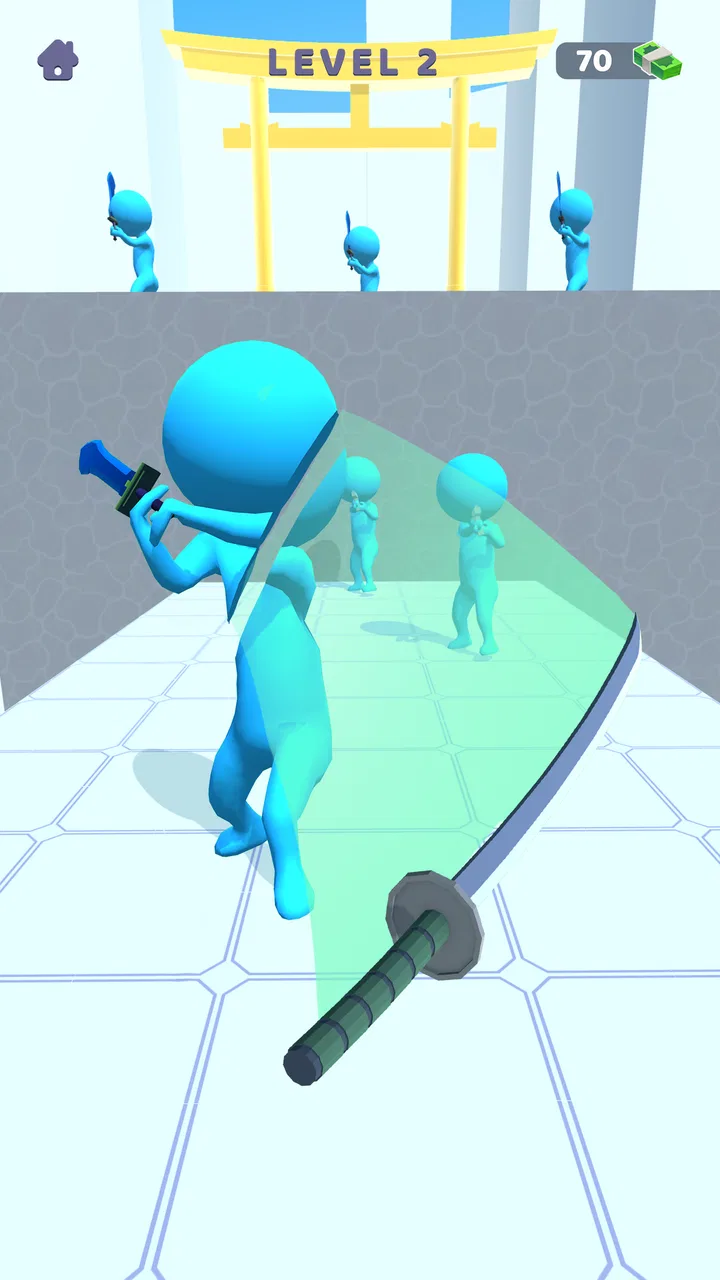
The visual identity is easy to understand. The stickman presentation keeps characters and threats visually simple, while the katana gives the central action an obvious focus. I never felt that the game was trying to hide its basic purpose behind menus or excessive decoration. The short description, “Sword Play,” is brief but accurate: this is about picking up the sword and reacting to what appears in front of me.
You May Also Like

 Blood Strike: 2.5 Anniversary
Blood Strike’s Loadouts Turn Every Drop Into a Tactical Gamble
A close look at Blood Strike’s custom loadouts: how fast access to signature weapons reshapes its battle royale rhythm, rewards preparation, and narrows the gap between fights.

 Pandora - Music & Podcasts
Pandora’s Music Is Easy to Start, but Harder to Recover
Pandora’s strength is its low-effort path from a seed to a station. Its weak spot is how much confidence it asks you to place in connection, setup, and quiet recovery.

 8 Ball Pool
 Is Built on Rivalries, Rematches, and Routine
A close look at the rivalries, rematches, shared routines, and unanswered safety questions that turn a quick pool match into a persistent mobile community.

 Samsung Music
’s Quiet Strength Is Playing What You Already Own
Its reach comes less from spectacle than from dependable access to a personal library. That simplicity is both the app’s strongest retention engine and its ceiling.

 AccuWeather: Weather Radar
AccuWeather Review: A Quick, Clear Forecast for Everyday Decisions
For everyday plans, the best forecast is the one you can understand quickly. AccuWeather makes rain timing, radar, and local conditions easy to act on, with a few trade-offs.

 Hill Climb Racing
Why Hill Climb Racing Still Turns Crashes Into One More Run
A tiny car, a bumpy hill and one more upgrade: Hill Climb Racing keeps resurfacing because its simple chaos makes every near-miss feel personal.
More From Our News Desk



That clarity is especially useful when I only have a few minutes. I can open the game, recognize the action quickly, and start playing without first remembering a complicated control layout. In my experience, this makes it suitable for a commute, a waiting room, or a short pause between other tasks. A game that asks for too much attention before the first move often gets abandoned in those situations; this one benefits from being more immediate.
The interface is most comfortable when I keep my attention on the play area rather than trying to read every element at once. Stickman graphics reduce visual clutter, but fast movement can still make the screen feel busy. Players who prefer large, highly separated interface elements may need a little time to become comfortable with the presentation. I would not call it confusing, but it rewards looking at the action itself instead of scanning the screen for detailed instructions.
One useful habit is to treat the first attempts as a visual orientation period rather than trying to play perfectly. I watch how enemies or hazards enter the scene, notice the timing of the sword action, and then adjust my movement. That approach is more effective than repeatedly tapping in panic. The game’s uncomplicated appearance can make it look effortless, but reacting at the right moment still matters.
Simple navigation helps short-session play
For me, the navigation works best because the game has a narrow purpose. I am not moving between many unrelated modes or managing a large collection of equipment. That reduces the mental effort needed to return after a few days away. If I want a quick action game rather than a hobby that demands regular maintenance, this is a genuine advantage.
There is also a practical benefit for younger or less experienced players who understand basic touch interaction but may not want to study a lengthy tutorial. The Teen content rating means it is aimed at an older audience than a purely child-focused game, so I would still make my decision based on the individual player rather than assuming it is suitable for everyone. The visual simplicity should not be confused with a universal age recommendation.
The current version is 10.13.7, and the game runs on Android 7.0 or later. That broad operating-system requirement makes it approachable for people using older compatible Android devices, although the experience will naturally depend on the phone’s screen, responsiveness, and general condition. I would check the device before installing if it has a small display or an aging touchscreen, because those factors affect a fast action game more than they affect a reading or puzzle app.
Motor demands and sensory comfort
The main physical demand is touch interaction at speed. Sword Play! Ninja Slice Runner is easier for me when I use a light touch and keep my hand relaxed. Pressing too hard does not improve timing, and it can make repeated attempts more tiring. Players with limited fine-motor control may find rapid reactions difficult, especially when the action requires precise timing rather than slow, deliberate input.
This is an important distinction from turn-based games or relaxed puzzle apps. Those alternatives give me time to plan each move and correct my hand position. Here, the pressure comes from responding while the scene is active. Someone who enjoys rhythm and quick reactions may find that exciting, while someone with tremor, reduced dexterity, or pain triggered by repeated tapping may experience the same design as a barrier.
I found that using both hands can help in longer sessions, even if one hand remains the main control hand. I can hold the phone more securely and reduce the strain caused by gripping it tightly. A stable grip also helps when the device is larger or heavier. This is a small adjustment, but it makes a noticeable difference during repeated attempts.
Screen size matters as well. On a compact phone, the play area can feel concentrated, which may help focus but leaves less room for comfortable hand placement. On a larger screen, visual targets are easier for me to follow, though reaching across the display may be less comfortable. There is no single ideal setup for everyone; the best choice depends on whether a player values reachability or visual separation more.
The stickman style is a sensory advantage in one respect because it avoids realistic gore and detailed character textures. Shapes are comparatively plain, and the action is easy to identify at a glance. However, fast movement, sharp changes, and repeated visual activity may still be tiring for players sensitive to motion or busy screens. I would recommend trying a brief session first instead of assuming that a minimalist art style automatically means low sensory intensity.
Sound can also affect comfort, particularly when playing in shared spaces or when a player is sensitive to sudden effects. I usually begin with the device volume low and increase it only if I actually need audio feedback. That makes the game easier to use in a library, office, or public transport. It also lets me concentrate on visual timing when background noise makes sound unreliable.
Playing when attention and energy are limited
This game can fit moments when I have low patience but still want something interactive. A short attempt gives me more engagement than passively scrolling, and the basic premise is easy to remember. That makes it useful after work, during a break, or while waiting for an appointment. I do not need to build a complicated plan before starting.
At the same time, fast action is not automatically relaxing. If I am tired, distracted, or already overstimulated, the need to react can feel demanding rather than refreshing. In those moments, a slower puzzle game or turn-based action title would be a better alternative. My recommendation depends heavily on whether the player wants stimulation or recovery.
For players who use a phone with a screen reader, magnification, switch access, or other system-level tools, the practical experience may vary. The game’s visual action and touch-based nature mean that people should test it with their usual setup rather than assume every control will translate comfortably. I would be cautious about recommending it to someone who depends on non-touch input unless they can try it first.
Where it fits in everyday situations
My favorite use case is a ten-minute gap in the day. I can play a few attempts while waiting for food, sitting before an appointment, or taking a short break from work. The game does not require the same commitment as a large role-playing game, and I do not need a dedicated evening to make progress. That makes it a practical choice for people who want action in small portions.
It can also work as a casual game to pass around among friends, provided everyone is comfortable with the Teen rating and the touch controls. The idea is immediately understandable: move, react, and use the katana effectively. A player who normally avoids complex games may be willing to try it because the premise is so direct. The trade-off is that the novelty may wear off faster for people who need a broad variety of activities.
Compared with endless runners, this game has a stronger sword-fighting identity and feels more focused on the ninja fantasy. Compared with traditional fighting games, it is less about memorizing long combinations or learning a large roster. Compared with physics-based stickman games, the emphasis is more clearly on slicing action than on experimenting with elaborate systems. Those comparisons explain its appeal: it sits in the accessible middle ground between a reflex game and a lightweight combat title.
That middle ground also means it may disappoint specialists. Players who enjoy competitive fighting games may find the action too narrow. Fans of platformers may want more exploration and level variety. People who prefer offline-friendly, quiet games may be better served by a turn-based alternative. I would choose this one when I want immediate swordplay, not when I want a complete substitute for those genres.
The game is free, which lowers the risk of trying it. Optional purchases between $1.99 and $3.99 per item are worth keeping in mind, particularly if a child or shared-device user will be playing. I would decide in advance whether purchases are allowed and use the device’s normal purchase controls accordingly. The free entry point is convenient, but “free” does not mean every player will have the same relationship with optional spending.
Small habits that improve the experience
First, I recommend playing with the phone held at a comfortable angle rather than flat on a table. A secure angle makes it easier to see incoming action and reduces the urge to grip the device tightly. This is especially useful for players who tire quickly in their hands or wrists.
Second, I avoid judging the game from a single failed attempt. Fast action titles often feel less readable until I understand the rhythm of their encounters. I watch one or two attempts with the goal of learning the visual cues, then play more deliberately. This turns frustration into a simple practice loop and helps reveal whether the controls suit me.
Third, I use shorter sessions when my attention is divided. Playing while walking, crossing a street, or handling another task is unsafe and also makes the game feel unfair because reaction timing suffers. The best casual use is stationary and focused, even if the session itself is brief.
Finally, I keep expectations aligned with the game’s scale. I do not approach it expecting a lengthy narrative or a complex build system. When I treat it as a compact action experience, its directness becomes a strength. When I expect the depth of a major console release, the same directness feels like a limitation.
Who should choose it, and who should skip it
I would recommend Sword Play! Ninja Slice Runner to someone who wants a free Android action game that can be understood quickly and played in short bursts. It is a good match for players who enjoy stickman visuals, sword-themed challenges, and the satisfaction of improving through repeated reactions. Its average rating of 4.6 from roughly 154 thousand ratings, together with more than 100 million installs, shows that the format has reached a very large audience, although popularity alone does not guarantee that its controls will suit every player.
I would be more selective for anyone who needs slow pacing, extensive accessibility options, or a game that can be comfortably controlled without precise touch input. I would also steer story-driven players toward a narrative adventure, and serious fighting-game fans toward a title built around deeper combat systems. This game is strongest when the goal is quick, uncomplicated action.
The Teen rating is another reason to consider the intended player rather than handing it to a child automatically. Parents and guardians should look at the game personally, consider the player’s sensitivity to action imagery, and remember that optional purchases are available. The clean stickman presentation may feel less intense than realistic combat, but the rating still deserves attention.
For someone using an older Android phone, the minimum requirement of Android 7.0 is reassuring, but I would still test touch responsiveness and screen comfort. A compatible operating system does not remove practical issues such as lag, a cracked display, or difficulty reaching controls. Those physical details can determine whether a fast game feels enjoyable or exhausting.
A focused action game with clear boundaries
After reviewing it as both a player and a phone user, I see Sword Play! Ninja Slice Runner as a focused, approachable action game rather than an all-purpose mobile adventure. CASUAL AZUR GAMES keeps the central idea easy to grasp: take control of a ninja, use the katana, and react to the threats in front of you. That focus supports quick navigation, short sessions, and a visual style that is easier to read than a heavily detailed combat game.
Its weaknesses are closely connected to those strengths. The same direct design can feel repetitive to players who want variety, and the fast touch interaction can exclude people who need slower or alternative controls. Sensory comfort also depends on the individual, since a simple stickman screen can still become intense when movement and reactions come quickly.
My final advice is straightforward: try it if you want a compact sword-action game for spare moments, and begin with short sessions on a stable, comfortable phone setup. Keep purchases controlled, pay attention to the Teen rating, and do not expect the depth of a full fighting game or story adventure. Its best quality is immediacy, not complexity. For the right player, that makes it an easy game to return to; for everyone else, a slower or more feature-rich alternative will be a better fit.
FAQs for Sword Play! Ninja Slice Runner
01What is Sword Play! Ninja Slice Runner about?
Sword Play! Ninja Slice Runner is an action-packed endless runner game where players take on the role of a ninja. The objective is to slice through enemies, dodge obstacles, and collect rewards as you progress through increasingly challenging levels. The game combines quick reflexes with strategic slicing, providing an immersive ninja experience.
02Is Sword Play! Ninja Slice Runner free to play?
Yes, Sword Play! Ninja Slice Runner is free to download and play. However, like many free-to-play games, it offers in-app purchases. These can enhance your gaming experience by allowing you to buy upgrades, skins, and other items. Keep in mind that all in-app purchases are optional.
03What are the in-app purchase options available?
In Sword Play! Ninja Slice Runner, players can purchase a variety of items to enhance their gameplay. Options typically include new swords, character skins, and power-ups. These purchases can help you progress faster or simply customize your ninja's appearance. Prices vary, so check the in-game store for details.
04Can I play Sword Play! Ninja Slice Runner offline?
Sword Play! Ninja Slice Runner can be played offline, allowing you to enjoy the game without an internet connection. This is ideal for players who want to play on the go without using data. However, certain features such as leaderboards and in-app purchases may require an online connection.
05What are the system requirements for Sword Play! Ninja Slice Runner?
Sword Play! Ninja Slice Runner is compatible with most modern Android and iOS devices. It requires at least Android 5.0 or iOS 10.0 to run smoothly. Ensure your device has sufficient storage space and a stable operating system to avoid crashes or performance issues during gameplay.
Pros
- Smooth and responsive controls
- Engaging and challenging levels
- Visually appealing graphics
- Regular updates and new content
- Minimal ads for uninterrupted play
Cons
- Levels can feel repetitive
- Limited character customization
- Requires internet for some features
- In-app purchases can be pricey
- Occasional performance lags

Sword Play! Ninja Slice Runner
Gallery